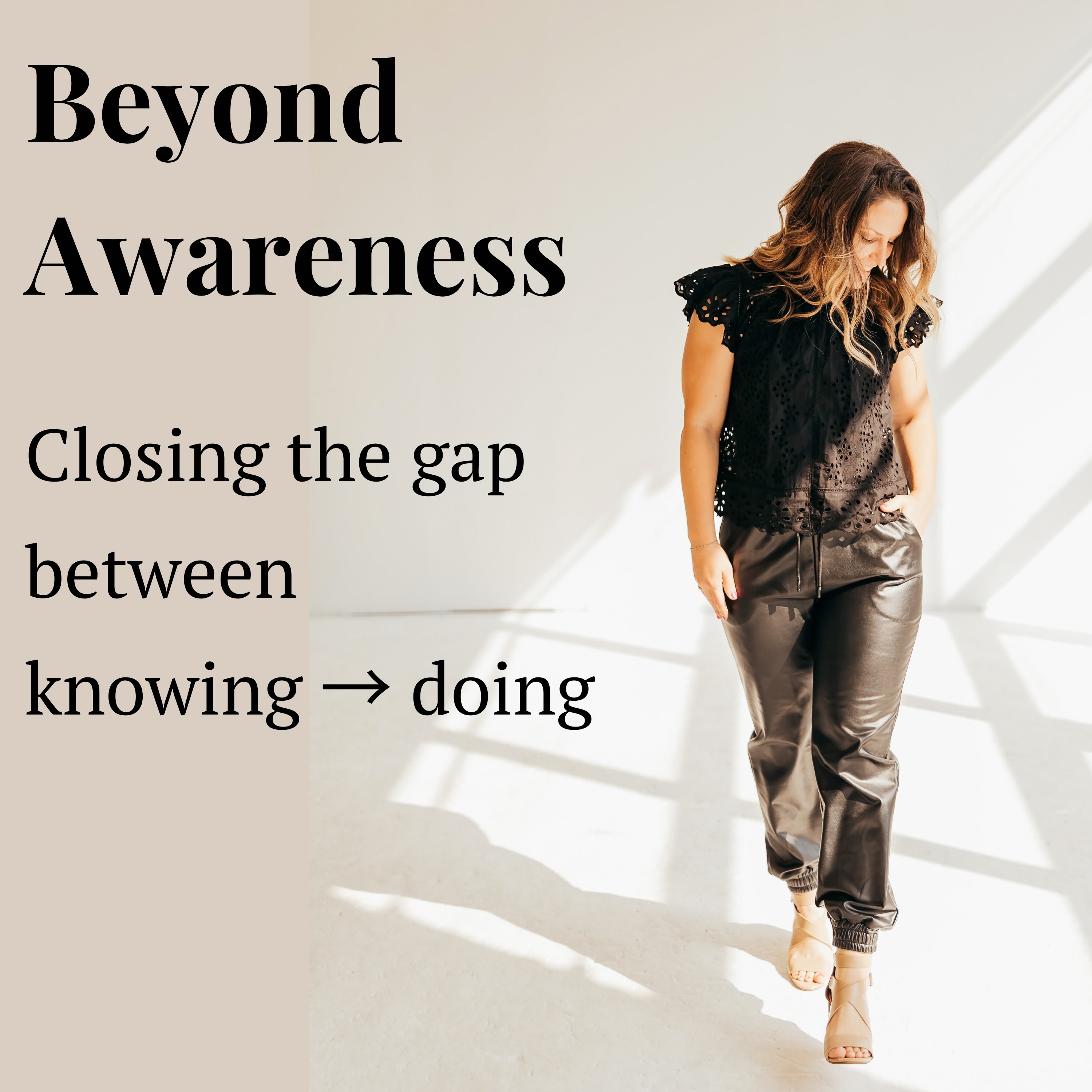
227. How to Stop People Pleasing and Still Be Seen as Sweet
Someone calls you sweet. It sounds like a compliment. But something about it feels off.
Because sometimes “sweet” carries an unspoken meaning underneath. Easygoing. Agreeable. The person who keeps the peace instead of saying what they actually want to say.
Over time that can quietly turn into people pleasing.
This episode is about the complicated relationship many of us have with the word sweet. How it can feel both kind and diminishing at the same time. Especially in work and relationships where being taken seriously matters.
After a conversation where Sam spoke up, challenged someone, and asked direct questions, the feedback she heard was that she was sweet. That moment raised a new possibility.
Maybe sweetness does not cancel out clarity. Maybe you can ask for what you need, say what you actually think, and still be someone people experience as kind.
If being nice has ever made it harder to speak up, this conversation might change how you think about it.
The episode ends with a few journaling questions to reflect on what sweetness means to you and whether it could actually be one of your strengths.
Work with me:
- Breakthrough Intensive - You already know you should slow down, delegate more, stop overcommitting & be emotionally present. So why can't you? That's what we figure out in 90 minutes + integration call 2 weeks later. Book your Breakthrough
- Exhale: Private Coaching - For women ready to do this work until it sticks and you can't revert back. 4 open spots: Work with me
Transcript
Welcome to Beyond Awareness. Have you ever been told that you are sweet? And more importantly, do you feel like that has been impacting how you show up at work or in your relationships, or maybe not how you show up, but how you are perceived? I have been told that I am sweet my whole life. And I hate this nickname, but...
There have been people in my life that call me Sweet Sam. And I get it. I think that am a very kind person and very sweet. I'll just say that. I think that it's always come, I know that it's always kind of felt like it is one side of that word is positive, but it also has a side of negativity.
I've always kind of felt like the feedback that I've gotten is that, especially in the professional world, is that it comes off as being sweet is not bold enough. Being sweet is not decisive enough. Being sweet is almost like it feels like that person is meek. That person is not taken seriously enough. That person is not enough.
Right? Not enough to be a solid leader. If we're talking about like professional and even in relationships, like a sweet person to me is like walked on, stepped on. Maybe it's me taking it to the next level or the nth degree. But that's, that's how I've felt when, whenever I hear the word sweet, that's the other side of the word sweet that I feel. And
I've heard this comment recently. I've gotten the feedback. Something a little nerdy about me that I've never talked about on the podcast is that I have this side job, if you will, where I help create email copy for launches, which I love because obviously I love writing, I love journaling, and I infuse storytelling and all of that to help this business do well with their launches.
And I hopped on a call with someone before a launch to learn about what the launch is, what the offers are, what basically what they want from me. And I heard afterwards through the grapevine that the person that I spoke with thought that I was sweet. And I honestly was shocked because on that call with her, I was kind and respectful 100%. But
I also challenged her on the organization of her systems because they could have definitely been more organized. And I suggested improvements and I asked her questions that made her think like she didn't know them off the top of her head. And she kind of seemed a little bit flustered. And all of these things made me think that the feedback would have been something along the lines of
Sam is nice, she's professional, and she does good work. I don't know. Or no feedback at all. But just the fact that the feedback was she's sweet, I was like, what? Like, it truly blew my mind because I did not feel sweet. I didn't feel like I went above and beyond to be nice. And when I received the feedback,
of sweet in that moment, I truly felt bummed because it felt like I wasn't taken seriously almost. And then I went to a local event in Rochester, New York called, well, it was the vocal honey event and it was titled Be Sweet. And it was called Be Sweet because it was around Valentine's Day. It was February 11th.
and it had like a Gallentine's theme. so that was like, again, the whole theme was sweetness, but she, the host, Kimberly Lafort, she hosts these pop-up workshops. And no matter what the theme is, it's always about getting better at speaking by understanding how our nervous systems impact our voice. It was amazing. It was really cool. And I loved it.
And I thought it was so interesting that the event that I could attend was about sweetness. I actually did not want to attend this event because I was like, ugh, I don't need this. don't, whatever, I don't know. I just didn't think I needed more sweetness in my life. But anyways, pretty early on in the event, Kim was saying that...
We need to listen to our bodies and be in our bodies and channel the sweetness that we have and view sweetness as power and our irresistibleness, is that a word, as power and really feel that within ourselves. When we feel sweetness as powerful internally, that is when we become magnetic.
That is when we magnetize what we want. We have to become irresistible with ourselves and with our voice, turning that into speaking, like using that sweetness, knowing that that is our power. And then we feel confident, like I'm even talking slower right now. That is our confidence that comes through. And it was just such a mindset shift. when I first heard it, I was like, oh, interesting.
and it just kept getting reiterated. And there were two questions throughout the night that really opened my eyes, I think, and got me to really hone in on this that I wanna share with you. The first one was, how do I want to feel about my voice? And so whether you can relate to sweetness or not, I think that this is a really powerful question. The way that I answered it initially is that I want my voice
to carry potent messages that cuts through surface level noise, that cuts through the noise. I feel like I have such a deep message to share and I think it's different for every, the message I share is unique to everyone. That's why I love one-on-one work because everyone needs to hear something different based on what they're going through and what their specific belief is.
and how that belief is showing up in their life, like how it applies to them and their situation. And it's so powerful once you can connect on that level. And it's so potent. So I hope that I want to feel that my voice is potent. I want to feel that it's taken seriously. And then Kim gave an example of in her previous marriage, how her ex-husband would give her the silent treatment.
And I was like, haha, I can relate. so once she opened that whole can of worms, I thought, yes, I want my voice to feel like when I say what I actually want to say, I won't be given the silent treatment and that my voice is not a liability. And so that one question, once you really think about it, it can open a can of worms and it really gets you to think about not just, you know, I want my voice to sound confident.
I want to be able to think quicker. I want to sound less jumbled. That's what I went into this event thinking. And I came out so much more potent. And then the second question. There was a co-host who was named Ruby Rodriguez. She just did a little segment in the middle. She is, I'm going to call her an herbal mixologist. I don't know if that's how she would name herself, but she...
took a lot of herbs and spices and whatnot and made us this honey and a drink. And it was this whole meditation, almost visualization. And then we did a little journaling. And in the visualization, she mentioned the reframe that sweetener is used for preservation in foods, right? Like sugar, sucrose, we see a lot, corn syrup that's used for preservation.
And then she asked the question, are you using sweetener for preservation, like people pleasing, or preservation in just like not saying what you want to say? Or are you using sweetener, your sweetness, for more joy? Meaning saying what you want to say, speaking up and sharing your needs, because that will bring you more joy.
And that wasn't a journal prompt, but as soon as we came out of the visualization, I wrote that down because I was like, mind blown. There's two sides. That's the two sides to the sweetener that I was sharing earlier. But introspectively, the people pleasing side is that negative side. And I think that that's why it hurt, not even hurt, but that's why I felt the negative side of being called sweet is because of my people pleasing tendencies.
I knew that it was well-intentioned every time somebody said something, but I knew that underneath all of that, I wasn't speaking up. I wasn't saying what I wanted to say and sharing my needs. And then in my meeting that I referenced earlier, I realized that I was saying what I wanted to say. I didn't have a filter. And it was because in that moment, I truly needed that information.
that I was asking for for the project. It not only would help me complete the project, but it would help me do it with more joy and ease and less frustration. Because not saying those things and not asking the questions and whatnot would mean bending over backwards after that call to create the spreadsheet myself, right? And to like do more research.
and other tasks that actually are not my job. That's not what they pay me for. They pay me to write really good copy. And if I didn't speak up, I would be adding hours of work on top. And the reason that I would do all of that and not say those things is to try to be nice, right? If I was trying to be nice and to try to be sweet on that call, AKA people pleasing, I wouldn't have said any of that. I would have been like,
Okay, a spreadsheet is easy enough. I'll just do that on the side. But no, instead I spoke up. I said, hey, do you have this? Or can you create something like this? And then she did. And here's the incredible thing is that I realized I was sweet while speaking up for myself. I just love that I had that moment and that feedback before this event because I was able to reflect on this example that
I actually spoke up in the meeting and being sweet was the feedback. And so I have that proof that when I speak up, people still view me as sweet, which I still don't know if I love that word, but I've decided that sweetness is my superpower. That even when I say something that I don't believe is sweet, people still sense that from me.
And after that little mini journaling session that I did in the middle of the event, they asked us to come up with a mantra. And I wrote down, am powerfully sweet and direct. And I realized you can be both. It's not like you can only be sweet. And if you're sweet, you can't speak up and you can't be direct. You can be both and both together. my gosh. That's like, that's really a skill. Like how cool is it?
to be able to ask for what you want and be direct and speak up and still be viewed as, my gosh, she is so sweet. Like the more I reflect ⁓ on it, I'm like, that is truly such a superpower because some people speak up and they're viewed as harsh. Some people never speak up and that's a whole other podcast episode. ⁓
And so anyways, I want to end this episode with a couple thoughts for you. Feel free to journal on them and feel free to journal on those other two questions. But what came up for me is who taught you that sweetness is a bad thing? And also, what does sweetness mean to you? If you can resonate with the stories that I've shared, what is your version of sweet?
When someone calls you sweet, yes, it's nice, but what else is it? What is the negative connotation that you have attached to it? And who taught you that? Or what experiences have made you feel like that? And then second, what if sweetness was your superpower? And if it was, how would that change the way you show up in your conversations?
What would you say? And more specifically, is there anything that you would say this week to somebody if you knew that you could say something and it would still be perceived as, my gosh, Sam is so sweet. And you actually asked for that raise at work or you actually told your partner that you were unhappy with.
the fact that they never fold laundry or whatever it is. What would you say knowing that the world didn't crumble or somebody didn't get mad at you? What would you say? And I would love for you to actually take action on that.
All right, so that is what I have for you. My sweet, sweet listeners, sweetness can be your superpower and it starts with that internal feeling and really embodying that. I'm so curious to hear if this resonates. If it does, feel free to reach out to me in my email or the links in the show notes where you can contact me on social media. But.
Thank you for tuning in this week. I so appreciate that you listen, that you follow along. And feel free to share this with somebody that you know, maybe that you think is sweet or that you know would just really resonate and would love to hear this message. Thanks again and I will see you next time.